





Leading for Nature: KCETB and Our Dúlra Agreement
In June, KCETB Chief Executive Dr Lindsay Malone and Director of Schools Dr Pauline Egan joined education system leaders at Wildacres, Co. Wicklow, to help shape Our Dúlra Agreement, a national commitment to nature-rich education. KCETB is now embedding the Agreement across the whole organisation. Here is what it means for our schools, centres and services.
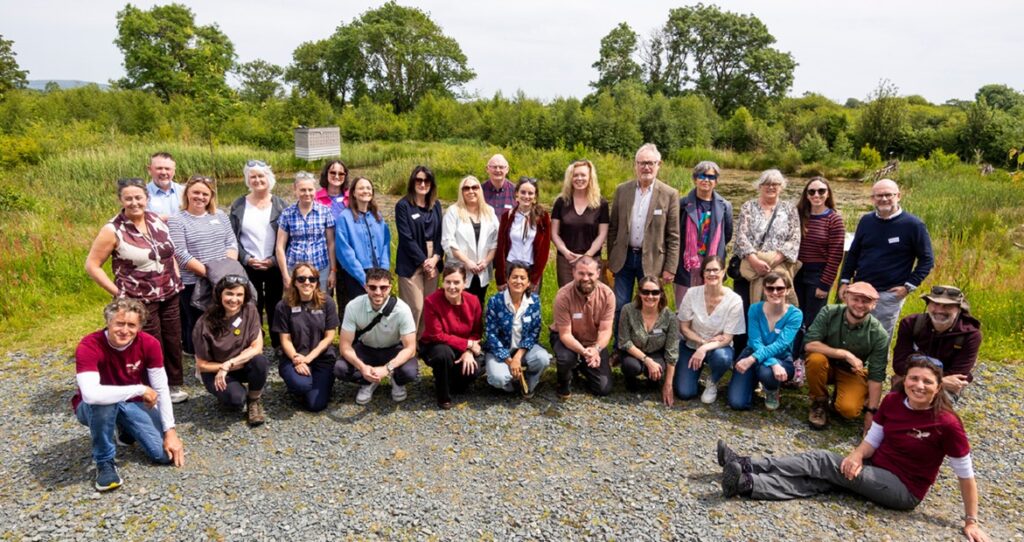
Dr Lindsay Malone, Chief Executive, and Dr Pauline Egan, Director of Schools, at Wildacres, Co. Wicklow, in June 2026.
Dúlra is the Irish word for nature, and Our Dúlra Agreement asks everyone who leads in Irish education a simple question: are we putting nature first? For KCETB, the answer is yes. The Agreement sets out six commitments to make school and educational grounds richer in biodiversity, and to make care for nature part of how we plan, teach, lead and govern.
Why it matters
Ireland is one of the most nature-depleted countries in the world, ranking 13th lowest of 230 countries and territories on the Biodiversity Intactness Index. Nature underpins both our climate and our economy, and we cannot tackle climate change without protecting and restoring the ecosystems around us. Biodiversity is not a ‘nice to have’, it is an absolute necessity.
The Citizens’ Assembly on Biodiversity Loss and the National Nature Restoration Plan have both issued an urgent call to action, and both specifically recommend more nature engagement and biodiversity education in schools. That means creating nature-rich spaces on school grounds where students and staff can learn how to care for the living world around them.
The Department of Education and Youth has put important supports in place through policy frameworks, school funding and curriculum reform, and genuine progress has been made on school grounds. But the pace of change has not yet matched the scale of the ecological crisis. It needs to increase.
Where the Agreement comes from
In September 2025, the Irish Schools Sustainability Network (ISSN) convened the Biodiversity Working Group for Schools (BWGS), a collective of expert organisations helping schools turn their grounds into biodiverse spaces. Their starting point will be familiar to many of us: much of the best work in schools is driven by individual champions and passionate students, often working in isolation.
To scale that energy, the group set out to partner with education system leaders. Influence in education flows downward, students focus on what teachers value, teachers align with senior leadership, and school leaders respond to the priorities of system leaders such as ETBs. A clear signal from the top that nature matters gives principals and teachers the mandate to act.
KCETB at Wildacres
In June 2026, Our Dúlra Agreement: A Commitment to a Nature-Rich Education was presented to education system leaders at Wildacres, a nature reserve in Co. Wicklow. Dr Lindsay Malone and Dr Pauline Egan represented KCETB on the day, working alongside other leaders to co-create a strategy for putting the Agreement’s six articles into practice.
Comments from Minister Hildegard Naughton, in a video address, drew on the words of David Attenborough:
“The fact is that no species have ever had such wholesale control over everything on Earth, living or dead, as we now have. That lays upon us, whether we like it or not, an awesome responsibility. In our hands now lies not only our own future but that of all other living creatures with whom we share the earth. Today, we look to you, as leaders, to drive that action forward.” Minister Hildegard Naughton, video address at Wildacres, June 2026
Leaders identified five key actions to drive the Agreement forward:
- Professional learning – creating opportunities for teachers and school leaders to engage in nature-related professional learning.
- Strategic planning – supporting schools to build biodiversity and nature education into their strategic plans and School Self-Evaluation (SSE).
- Modelling good practice – enhancing biodiversity on leaders’ own organisational grounds and mapping them with the All-Ireland Pollinator Plan tool, so that every school is encouraged to do the same.
- Amplifying success – championing and scaling the excellent environmental work already under way in schools, and finding creative ways to share students’ work with the wider community.
- Embedding a nature-first mindset – making biodiversity a consistent item on the agendas of meetings and conferences, deepening shared understanding, and agreeing actions for improvement.
A whole-of-organisation commitment
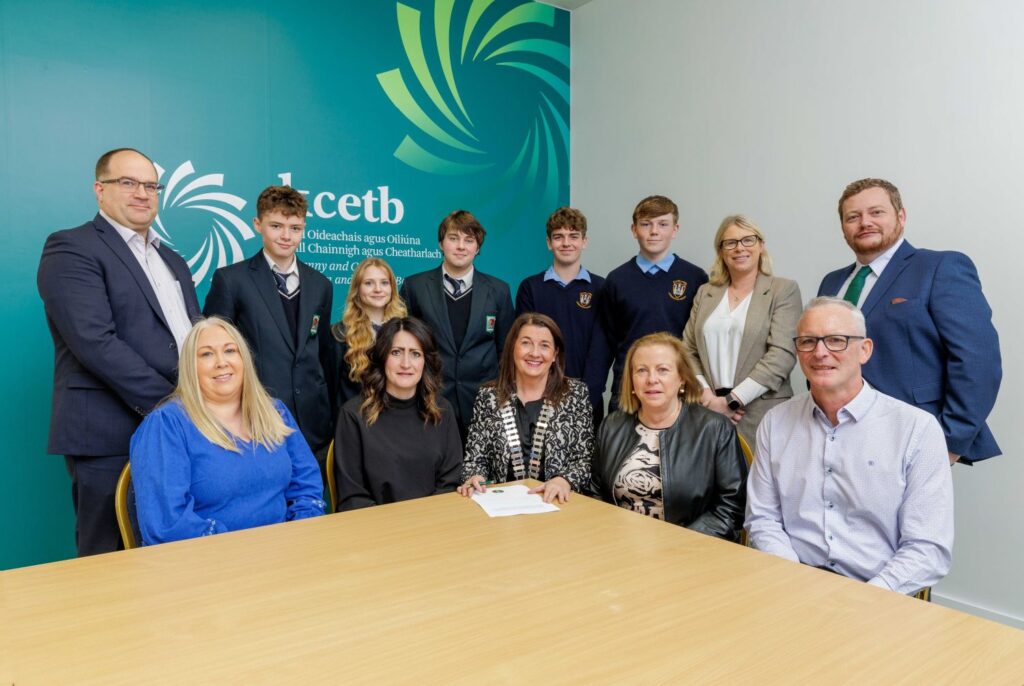
“The implementation of Our Dúlra Agreement is a whole-of-organisation commitment for KCETB. By embedding its principles across our learning environments, operations, programmes and decision-making, we can work collectively to enhance biodiversity, strengthen environmental stewardship, and ensure respect for nature is reflected in how we learn, lead and serve our communities. This shared commitment will help create a more sustainable future for current and future generations.” Dr Lindsay Malone, Chief Executive, KCETB
“Our schools are already doing wonderful work for nature, much of it led by committed teachers and students. What Wildacres made clear is that this work grows when it has leadership behind it. I want every KCETB school to see biodiversity as part of who we are , on our grounds, in our planning and in our classrooms, and I look forward to supporting our principals and teacher champions to make that happen.” Dr Pauline Egan, Director of Schools, KCETB
The six articles of Our Dúlra Agreement
| ARTICLE 1
Improving Biodiversity in Educational Grounds |
We commit to actively improve biodiversity across our educational grounds, transforming lawns to meadows and grey spaces into green biodiversity-rich ones. |
| ARTICLE 2
Mapping for Biodiversity |
We encourage schools to engage with the All-Ireland Pollinator Plan and to map out their school grounds for biodiversity. |
| ARTICLE 3
Leadership Connection for Biodiversity |
We commit to staying connected as a network of leaders, ideally in a biodiversity-rich setting to share good practice, witness successful nature-based projects first-hand, and strengthen our collective resolve to improve biodiversity in educational grounds. |
| ARTICLE 4
Values and School Governance for Biodiversity |
We pledge to support school communities to ensure that biodiversity becomes a core value of daily life in school and school governance. |
| ARTICLE 5
Empowering Teacher Leadership for Biodiversity |
We commit to advocating for teacher champions to take action on improving biodiversity on school grounds, to engage in professional learning and knowledge sharing. |
| ARTICLE 6
A Whole School Culture for Biodiversity |
We aim to foster a whole school culture where every member of the school community will be thinking with a nature-first mindset, making decisions that consider nature, and living in a way that honours and respects nature to be reflected in the campus, curriculum and community. |
What this means across KCETB
Our Dúlra Agreement was written with school grounds in mind, but Dr Malone’s commitment reaches across the whole organisation, our schools and colleges, our further education and training centres, our offices and our services. In practice, that means:
- Learning environments – transforming lawns into meadows and grey spaces into green ones across our schools, colleges and centres, and using those spaces for teaching and learning.
- Operations – leading by example on our own sites, including our offices in Carlow and Kilkenny, by mapping them with the All-Ireland Pollinator Plan tool and managing them for nature.
- Programmes – supporting staff to take up nature-related professional learning and drawing on the expertise that already exists, so that no one needs to be a biodiversity expert to get started.
- Decision-making – building biodiversity into strategic plans, SSE and the work of boards of management, and keeping it on the agenda at KCETB meetings and events.
What you can do
You don’t need to be an expert. The technical knowledge already exists – what matters is leadership and a willingness to act. Some simple, often low-cost places to start:
- Map your grounds using the All-Ireland Pollinator Plan mapping tool.
- Identify a lawn that could become a meadow, or a grey space that could be greened.
- Name a biodiversity champion among staff or students, and give them the time and backing to lead.
- Add biodiversity to your next staff meeting, student council or board of management agenda.
- Share what you are doing with the KCETB communications team, so we can celebrate and spread good practice across the ETB.
- Use the ISSN website, which will host the Agreement along with practical resources and links to organisations that can support you.
Next steps
Our Dúlra Agreement will be formally launched by Minister Christopher O’Sullivan on 12 November 2026 at Firhouse ETSS, Dublin, when system leaders and educational organisations will be invited to pledge their formal commitment. KCETB’s whole-of-organisation commitment means we are ready to play our part.
The authors of the Agreement close with a question for every educator: one day, we will ask ourselves, “What did we do when we knew?” At KCETB, we want our answer to be clear.
 English (UK)
 Gaelic